Why I Never Guess My Health Anymore — This Anti-Aging Shift Changed Everything
You don’t have to feel older to start aging. The real shift happens long before you notice — in silent blood sugar spikes, unnoticed sleep dips, or rising stress markers. I used to ignore these until I saw my energy fading and skin losing bounce. That’s when I started tracking, not guessing. What I discovered wasn’t magic — it was monitoring. This is how health tracking became my most powerful anti-aging tool, and how it can work for you too.
The Moment I Realized Anti-Aging Isn’t Just Skincare
For years, I believed that looking and feeling younger was mostly about what I put on my skin. I invested in serums, moisturizers, and facial treatments, convinced that external care was the key to slowing time. I ate reasonably well, walked regularly, and tried to manage stress. But despite all of it, I began noticing changes that skincare couldn’t fix — persistent fatigue, difficulty concentrating, and a sense of heaviness that lingered even after a full night’s sleep. I looked in the mirror and saw shadows under my eyes no concealer could hide, and my skin, once firm and glowing, seemed to sag slightly, lacking its former resilience.
What troubled me most was that I didn’t feel dramatically unwell. I wasn’t sick, at least not in any diagnosable way. I simply wasn’t thriving. I’d wake up without enthusiasm, rely on coffee to push through the morning, and feel drained by mid-afternoon. My motivation for exercise waned, and even simple tasks felt heavier than they should. I started questioning whether this was just what middle age felt like — a slow, inevitable decline masked as normalcy. But deep down, I wondered: if I felt mostly fine, why did my body seem to be losing its vitality so quietly?
That question led me to a critical realization: the idea of “feeling fine” is often misleading. Our bodies are remarkably adaptive, capable of masking dysfunction for years before symptoms become undeniable. What we interpret as normal aging may, in fact, be the cumulative result of small, unaddressed imbalances — things like slightly elevated inflammation, minor hormonal shifts, or metabolic inefficiencies. These changes don’t announce themselves with alarms; they creep in silently, reshaping our health from within. I began to understand that true anti-aging isn’t just about appearance or even lifestyle habits — it’s about listening to what the body is saying beneath the surface. That’s when I shifted from guessing to monitoring, and everything changed.
What Health Monitoring Actually Is (And Why It’s Not Just for the Sick)
When I first heard about health monitoring, I assumed it was something reserved for people with chronic conditions — diabetics checking glucose, heart patients tracking blood pressure, or athletes fine-tuning performance. I didn’t see myself in that category. I wasn’t sick, so why would I need to track anything? But as I learned more, I realized that health monitoring isn’t about illness — it’s about insight. It’s the practice of regularly collecting data about your body’s key functions to understand how it’s really doing, not how you think it’s doing. This includes tracking biomarkers such as sleep quality, resting heart rate, heart rate variability, blood pressure, glucose trends, and body composition.
These measurements matter because they reveal patterns that feelings alone cannot. For example, you might believe you sleep well because you don’t wake up often, but a sleep tracker could show that you’re spending too little time in deep or REM sleep — the stages critical for cellular repair and cognitive recovery. Similarly, your energy levels might feel stable day to day, but subtle dips in heart rate variability could indicate rising stress or poor recovery, long before you feel overtly fatigued. By measuring these signals consistently, you create a personal baseline — a reference point unique to your body — that allows you to detect deviations early.
The science behind this approach is well-established. Research shows that chronic, low-level imbalances in metabolic and inflammatory markers are strongly linked to accelerated aging and increased risk of age-related conditions. The body doesn’t suddenly deteriorate; it signals distress long in advance. Monitoring allows you to catch these signals early, often years before clinical symptoms appear. It’s like having a dashboard for your health — not to create anxiety, but to empower informed choices. You’re not waiting for a breakdown to act; you’re maintaining the system proactively. This shift from reactive to preventive care is what makes health monitoring one of the most effective anti-aging strategies available today.
The Anti-Aging Power of Data: Why Your Body Ages in Silence
Aging is often described as a visible process — wrinkles, gray hair, slower movement — but its roots are invisible, unfolding at the cellular and molecular level. At the core of aging are processes like chronic inflammation, oxidative stress, and metabolic decline. These aren’t dramatic events; they’re slow, continuous processes that erode cellular function over time. Inflammation, for instance, is a natural immune response, but when it becomes persistent — even at low levels — it damages tissues and accelerates the aging of organs, skin, and blood vessels. Oxidative stress occurs when free radicals outnumber antioxidants, leading to DNA damage and cellular aging. Meanwhile, metabolic slowdown affects how efficiently your body converts food into energy, influencing weight, energy levels, and hormone balance.
What’s most insidious is that these processes often progress without noticeable symptoms. You don’t feel inflammation burning inside you, nor do you sense your mitochondria — the energy powerhouses of your cells — becoming less efficient. Yet, over time, these silent changes manifest as fatigue, brain fog, weight gain, and loss of skin elasticity. This is why relying on how you feel is an incomplete measure of health. By the time symptoms become obvious, the underlying damage may already be significant.
Tracking changes this. One of the most revealing moments for me came when I began monitoring my energy patterns alongside my sleep and glucose data. I had always thought I was energetic in the morning, but the data showed a different story. My glucose levels would spike sharply after breakfast — even after what I considered a healthy meal — followed by a crash by mid-morning. At the same time, my heart rate variability, a marker of nervous system balance and recovery, was consistently low in the early hours, suggesting my body wasn’t fully rested despite adequate sleep duration. These findings explained why I needed coffee to function and why my focus faded by 10:30 a.m. I wasn’t imagining it — my body was under silent stress. By adjusting my breakfast to include more protein and fiber and reducing refined carbohydrates, I stabilized my glucose and saw immediate improvements in energy and mental clarity. This was the moment I realized: data doesn’t lie, and it can reveal what feelings cannot.
My Daily Monitoring Toolkit: Simple, Not Overwhelming
When I first considered health tracking, I worried it would become complicated — another chore in an already busy day. I imagined wires, apps, and endless numbers to interpret. But what I’ve learned is that effective monitoring doesn’t require complexity. It’s about consistency and relevance. I use a few simple tools that fit naturally into my routine, each serving a specific purpose without overwhelming me. The key is choosing what aligns with your goals and sticking with it long enough to see patterns.
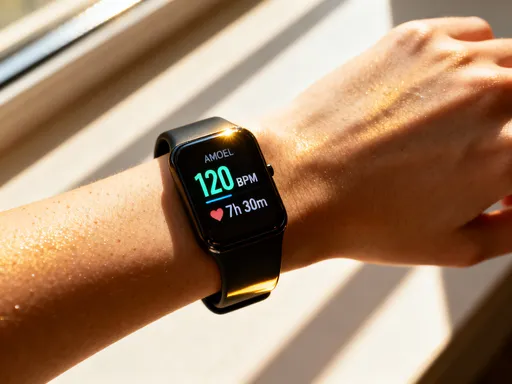
One of the first tools I adopted was a wearable sleep and activity tracker. It monitors my sleep stages, heart rate, and heart rate variability throughout the night. I don’t obsess over every number, but I check the overall trends weekly. For example, if I see several nights in a row with low deep sleep, I consider what might be disrupting my rest — late meals, screen time, or stress. The device also tracks my resting heart rate, which tends to rise when I’m overworked or under-recovered, giving me an early warning to slow down.
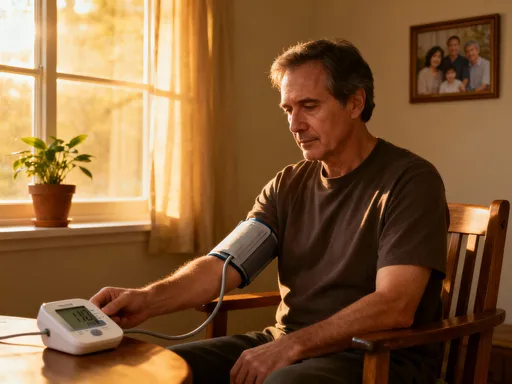
At home, I use a blood pressure monitor and a body composition scale. I check my blood pressure once a week, not because I have hypertension, but to ensure it stays in a healthy range. High blood pressure is often called the “silent killer” because it typically has no symptoms, yet it significantly impacts cardiovascular aging. The scale I use measures more than weight — it estimates body fat percentage, muscle mass, and hydration levels. This helps me understand whether changes in my weight are due to fat loss, water retention, or muscle gain, which is far more informative than the number alone.
I also use a continuous glucose monitor occasionally, especially when I’m experimenting with new foods or trying to understand energy crashes. It’s not something I wear every day, but during certain periods, it provides invaluable insight into how my body responds to different meals. Finally, I keep a simple journal where I note my mood, energy levels, digestion, and any physical sensations each day. This non-tech component is just as important — it connects the data to how I actually feel and live. Together, these tools form a balanced system that keeps me informed without becoming obsessive.
How I Use Data to Adjust My Habits — And See Real Changes
Collecting data is only useful if it leads to action. The real power of health monitoring lies in using the information to make informed, personalized adjustments. One of the most impactful changes I made was to my evening routine, based on sleep data. For months, my tracker showed that while I was getting seven to eight hours in bed, my sleep efficiency — the percentage of time actually spent sleeping — was low. I was waking up multiple times, and my deep sleep was consistently below average. I began experimenting with small changes: turning off screens by 8:30 p.m., drinking herbal tea instead of coffee after 2 p.m., and doing a short stretching routine before bed. Within two weeks, my sleep efficiency improved by 15%, and I woke up feeling more refreshed. The data didn’t tell me what to do, but it confirmed what worked.
Diet was another area where tracking made a dramatic difference. I considered myself a healthy eater — plenty of vegetables, whole grains, lean proteins — but my glucose monitor revealed unexpected spikes after meals I thought were balanced. One breakfast of oatmeal with fruit and honey, for instance, caused a sharp rise followed by a crash two hours later. I replaced it with scrambled eggs, avocado, and spinach, and the glucose curve flattened significantly. This didn’t mean I had to eliminate carbs, but it taught me to pair them with protein and fat to slow absorption. Over time, these small dietary tweaks led to more stable energy, fewer cravings, and even improvements in skin clarity — a visible sign of better internal balance.
Exercise was also refined through data. I’ve always enjoyed movement, but I used to push myself hard, believing more was better. My heart rate variability readings told a different story: after intense workouts, my recovery scores were poor for days, indicating my body wasn’t fully recovering. I realized I was causing low-grade inflammation through overtraining. I shifted to a more balanced approach — alternating high-intensity sessions with walking, yoga, and rest. My recovery metrics improved, and paradoxically, I felt stronger and more energized. This experience taught me that fitness isn’t just about exertion; it’s about recovery and sustainability. Data helped me find that balance.
Common Pitfalls and How I Avoid Them
While health monitoring has been transformative, it’s not without challenges. One of the biggest risks is becoming overly focused on numbers — what some call “data obsession.” In the early days, I found myself checking my devices multiple times a day, worrying about minor fluctuations. A slightly elevated resting heart rate one morning would send me into a spiral of concern, even though I’d had a late night. I learned that daily variations are normal; what matters are long-term trends. Now, I review my data weekly rather than daily, looking for patterns over time rather than reacting to single data points. This shift in perspective reduced anxiety and made tracking more sustainable.
Another pitfall is mistaking self-monitoring for medical diagnosis. No device can replace a doctor’s expertise. There were moments when my blood pressure readings were consistently high, or my glucose levels showed unusual patterns. Instead of trying to interpret these alone, I shared the data with my healthcare provider. This allowed for a more informed conversation and, when necessary, further testing. Monitoring is not about self-diagnosing or avoiding professional care — it’s about enhancing it. Having objective data gives doctors a clearer picture of your health between visits, leading to better-informed decisions.
Finally, information overload is a real concern. It’s tempting to track everything — sleep, steps, glucose, hydration, mood, posture, UV exposure — but doing so can lead to burnout. I’ve simplified my approach by focusing only on the metrics most relevant to my goals: energy, recovery, and metabolic health. I don’t track everything, just what matters. This keeps the process manageable and meaningful. The goal isn’t to collect data for its own sake, but to use it to support a healthier, more vibrant life.
Building a Sustainable Anti-Aging Routine Around Monitoring
What began as an experiment has become a lasting part of my life. Health monitoring is no longer something I do — it’s part of how I live. The shift wasn’t overnight; it took time to integrate these habits without feeling burdened. At first, it felt like homework. But as I began to see real improvements — more energy, better sleep, clearer skin, and a greater sense of control — it became self-reinforcing. The motivation shifted from fear of aging to a desire for vitality. I wasn’t chasing youth; I was investing in long-term well-being.
The mindset change was crucial. I stopped seeing my body as something that was inevitably declining and started viewing it as a system I could support and optimize. This isn’t about perfection — some days my sleep is poor, my meals aren’t ideal, and my stress is high. But because I’m tracking, I notice these patterns and can respond with compassion and adjustment, not guilt. Progress, not perfection, became the guiding principle. I’ve learned to celebrate small wins: a week of stable glucose, a morning without brain fog, a walk taken because my body needed movement, not because I was punishing myself.
For anyone considering this path, I recommend starting small. Choose one area — sleep, energy, or digestion — and pick one tool to explore it. Let it become routine before adding more. Be patient. The benefits accumulate over time, not overnight. And most importantly, remember that the goal isn’t to achieve a perfect score on every metric, but to deepen your relationship with your body. When you listen closely, it tells you what it needs — not through dramatic symptoms, but through quiet signals. By paying attention, you gain not just more years, but more life within those years.
Health monitoring isn’t about fear — it’s about freedom. By understanding my body’s signals, I’ve gained control over how I age. This isn’t a quick fix, but a lifelong commitment to listening closely, acting early, and living fully. The best anti-aging secret? Pay attention — your body’s already telling you what it needs.