How I Rediscovered Strength Through Real Rehabilitation
Recovery isn’t just about healing—it’s about relearning how to move, live, and trust your body again. After my injury, I thought I’d never regain full function. But through consistent, mindful rehabilitation training, I saw real progress. This journey taught me that true healing starts with awareness. It’s not just physical—it’s mental, emotional, and deeply personal. I learned to listen to my body, to honor its limits, and to celebrate small victories. This is not a story of a miracle cure, but of steady, intentional effort. It’s about how rehabilitation, when approached with patience and presence, can rebuild more than strength—it can restore confidence, independence, and a deeper connection to oneself.
The Moment Everything Changed
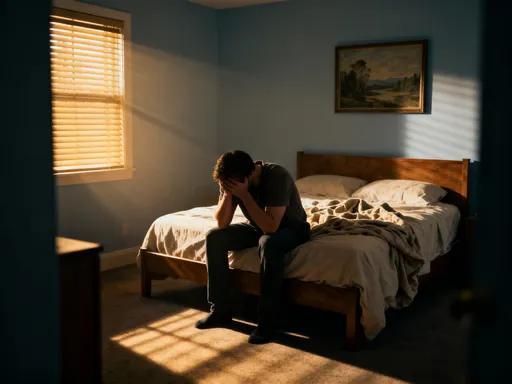
The injury came without warning. One moment, life was moving forward with its usual rhythm—managing household routines, caring for family, staying active in small but meaningful ways. The next, a fall on a slippery kitchen floor left me with a sprained ankle and a torn ligament that required months of recovery. At first, I assumed rest and time would be enough. I expected to heal passively, as if the body could simply reset itself like a machine left idle. But weeks passed with little improvement. Pain flared with the simplest movements—stepping off a curb, standing for more than a few minutes, even putting on socks. The frustration grew. Simple tasks that once felt automatic now required planning and effort. I felt isolated, not just physically limited, but emotionally drained by the loss of independence.
What I didn’t realize then was that healing wasn’t just about waiting. It was about doing—doing the right things, at the right pace, with the right mindset. My initial approach was rooted in misconceptions. I believed that if I just rested long enough, I’d bounce back. Or worse, I thought that pushing through pain would speed up recovery, echoing the outdated idea that discomfort meant progress. Neither approach worked. In fact, both delayed my healing. The turning point came during a routine check-up with a physical therapist, who asked a simple but powerful question: 'Are you rehabilitating, or just waiting to heal?' That question shifted everything. It made me realize that recovery wasn’t something that happened to me—it was something I had to actively participate in. It required commitment, consistency, and a willingness to relearn even the most basic movements.
This realization marked the beginning of a new phase. I stopped seeing rehabilitation as a temporary inconvenience and started viewing it as a necessary investment in my long-term well-being. I began to understand that the body, like any complex system, needed guidance to rewire itself after injury. My role wasn’t to force it back into action, but to support it with intelligent, structured movement. The emotional weight of the injury didn’t disappear overnight, but I began to feel a sense of agency. I wasn’t helpless. I had tools, and more importantly, I had the ability to learn how to use them.
Why Rehabilitation Is More Than Just Exercise
Rehabilitation is often misunderstood as just another form of exercise—something you do to get stronger or lose weight. But in the context of recovery, it’s fundamentally different. It’s not about burning calories or building muscle mass. It’s about retraining the body to move safely, efficiently, and with confidence. True rehabilitation focuses on neuromuscular re-education—helping the brain and nervous system reconnect with injured or weakened areas. After an injury, movement patterns change. The body compensates. You might favor one leg, shift your weight unevenly, or move with tension where there should be ease. These adaptations may protect you in the short term, but over time, they can lead to new imbalances and even secondary injuries.
The brain-body connection is central to this process. When you sprain an ankle, for example, the injury affects not just the ligaments but the proprioception—the body’s ability to sense where it is in space. That means even after the pain fades, your brain may still 'forget' how to balance properly on that foot. Rehabilitation rebuilds this awareness through targeted, repetitive movements that rewire neural pathways. It’s like relearning to write with your non-dominant hand—awkward at first, but gradually becoming more natural with practice. This is why generic workouts or fitness routines often fall short for recovery. They may improve general strength, but they don’t address the specific functional deficits caused by injury.
Another common misunderstanding is the idea that progress requires pain. The 'no pain, no gain' mentality has no place in rehabilitation. In fact, pushing through pain can do more harm than good. Real healing happens through gradual, controlled progression—moving just beyond your current capacity without triggering injury. It’s about finding the 'sweet spot' where challenge meets safety. This requires patience and self-awareness. It also requires letting go of timelines. Healing isn’t linear. Some days bring improvement; others bring setbacks. But each session, even a quiet one, contributes to the larger process. Rehabilitation, at its core, is not punishment—it’s a form of communication with your body, a way of saying, 'I’m here, and I’m listening.'
Building Awareness: The Missing Link in Recovery
One of the most transformative aspects of my rehabilitation journey was learning to pay attention—not just to what I was doing, but to how I was doing it. Physical awareness, or kinesthetic mindfulness, became the foundation of my progress. Before my injury, I moved on autopilot. I walked, stood, lifted, and bent without thinking. But after the fall, I realized how little I truly understood about my own body. I didn’t notice when I was holding my breath during effort, or when my shoulders crept up toward my ears. I didn’t recognize the subtle signs of fatigue until they turned into pain. Developing awareness changed that.
Mindfulness in motion means tuning in to the details: the alignment of your joints, the quality of your breath, the distribution of weight in your feet. It means noticing when one side of your body is doing more work than the other, or when your posture shifts unconsciously. For example, during early balance exercises, I discovered that I was leaning slightly to the right, even when standing still. That small imbalance, invisible to the naked eye, was a sign of deeper compensation patterns. By simply becoming aware of it, I could begin to correct it. I started using a mirror during exercises, not to check appearance, but to provide visual feedback. I paid attention to the feeling of my foot pressing into the floor, the engagement of my core, the rhythm of my breathing.
These small realizations led to big improvements. I found that when I focused on my breath during stretching, my muscles relaxed more deeply. When I corrected my posture while sitting at the kitchen table, my lower back felt less strained. Awareness didn’t just improve my rehabilitation—it helped me prevent future injuries. It taught me to recognize early warning signs: tightness, asymmetry, tension. Instead of ignoring them, I learned to respond with gentle corrective movements. Over time, this awareness became second nature. I no longer had to remind myself to check in. My body and mind had relearned how to work together. This shift wasn’t just physical—it was psychological. I felt more in control, more confident in my movements, and more connected to my own well-being.
My Daily Rehab Framework: Structure That Actually Works
Consistency, not intensity, became the cornerstone of my recovery. I stopped chasing dramatic results and focused instead on showing up every day, even if only for ten minutes. I built a simple, adaptable routine that fit into my life as a busy adult with family responsibilities. It wasn’t about perfection—it was about progress. My daily framework included four key components: a warm-up ritual, targeted mobility drills, strength integration, and a cooldown with reflection. Each part played a specific role, and together, they created a sustainable rhythm.
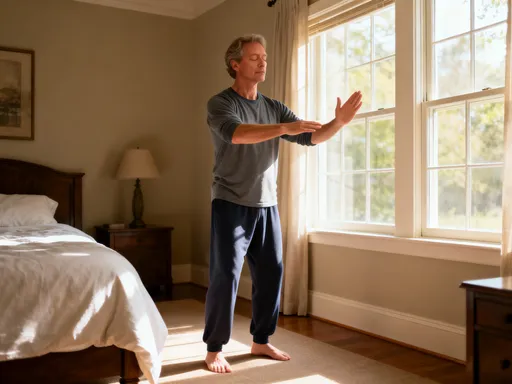
The warm-up was gentle but intentional. I began with diaphragmatic breathing—lying on my back, one hand on my chest, one on my belly, inhaling deeply through the nose and feeling the abdomen rise. This helped activate the parasympathetic nervous system, reducing stress and preparing the body for movement. Then, I moved into slow joint circles—wrists, ankles, shoulders—lubricating the joints and increasing circulation. These small movements signaled to my body that it was time to wake up, not push hard, but prepare.
The mobility drills were the heart of my routine. I focused on areas affected by my injury and those prone to compensation. For my ankle, I used towel-assisted range-of-motion exercises—seated with a towel looped around the ball of my foot, gently pulling it toward me to stretch the calf and Achilles tendon. I practiced weight-shifting from heel to toe and side to side to rebuild balance. I used a foam roller for my calf and outer thigh to release tension. All the tools I used—resistance bands, foam rollers, a simple mirror—were affordable and widely available. None required special training to use safely.
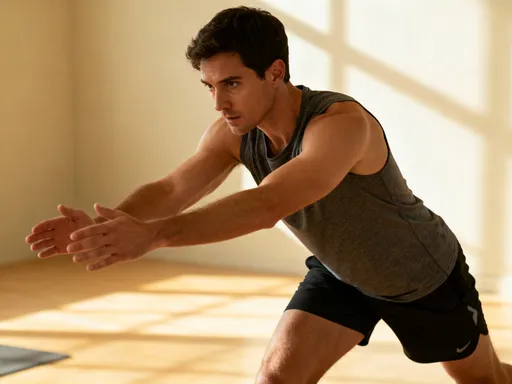
Strength integration came next, but not in the way I once imagined. I didn’t lift heavy weights or do high-repetition circuits. Instead, I focused on functional movements—mini squats, step-ups on a low stair, single-leg stands. These exercises rebuilt stability and coordination. I used a resistance band around my thighs during squats to activate the gluteus medius, a muscle often underused after lower-body injuries. I tracked my progress not with numbers, but with a simple journal. I noted how I felt each day—energy level, pain level, confidence. This helped me recognize patterns and adjust when needed. The cooldown was a quiet moment of reflection—lying down, breathing slowly, and mentally reviewing what I had done. This practice reinforced the connection between effort and outcome.
Overcoming Plateaus and Mental Blocks
Progress was not constant. There were weeks when I felt stuck—no improvement, no new milestones. These plateaus were frustrating, even discouraging. I would look at my journal and wonder if I was doing enough, or doing it right. The fear of re-injury also lingered. Even after months of recovery, I hesitated before stepping off a curb or walking on uneven ground. My mind would flash back to the fall, and my body would tense in anticipation. These mental blocks were as real as the physical ones, and they required just as much attention.
When progress stalled, I learned to adjust rather than abandon. I revisited my exercises, refined my form, or introduced small variations—changing the angle of a stretch, adding a balance challenge, or slowing down the tempo. Sometimes, the breakthrough came not from doing more, but from doing less. Taking a rest day—without guilt—allowed my body to recover and integrate the work. I reminded myself that healing isn’t a race. It’s a process that respects the body’s natural rhythms.
Patience and self-compassion became essential. I stopped measuring my worth by how fast I healed. Instead, I celebrated small wins: standing on one leg for 30 seconds, walking a mile without pain, putting on shoes without sitting down. I set micro-goals—tiny, achievable targets that kept me motivated. One week, my goal was to complete all my daily exercises without skipping a day. The next, it was to walk around the block with better posture. These goals weren’t flashy, but they built momentum. I also sought feedback from my physical therapist, who provided objective insights and reassurance. Knowing I wasn’t alone in the process made a difference.
When to Seek Professional Guidance
While self-awareness and home-based routines were powerful, I never underestimated the value of professional guidance. A physical therapist didn’t just give me exercises—they tailored them to my specific needs, corrected my form, and helped me avoid harmful compensations. They monitored my progress with clinical assessments and adjusted the plan as I improved. This collaboration was invaluable. I brought the daily commitment; they brought the expertise. It was a partnership rooted in mutual respect.
Working with a professional also provided accountability and safety. There are limits to what you can assess on your own. A trained eye can spot imbalances you might miss. They can distinguish between normal discomfort and warning signs of overuse. They can introduce advanced techniques—manual therapy, gait analysis, neuromuscular re-education strategies—that go beyond what’s possible at home. Seeking help wasn’t a sign of weakness—it was a sign of wisdom. It showed that I valued my health enough to invest in expert support.
It’s important to emphasize that the insights shared here are based on personal experience and should not replace professional medical advice. Every body is different. What worked for me may not be appropriate for someone else. Always consult with a qualified healthcare provider before beginning any rehabilitation program, especially after an injury or surgery. This article is not a substitute for diagnosis or treatment. It’s a reflection on one person’s journey, offered in the hope that it might inspire others to approach their own recovery with patience, awareness, and care.
From Recovery to Resilience: A New Relationship with Health
Rehabilitation changed me in ways I never expected. It didn’t just restore my ability to walk or stand—it reshaped my relationship with my body and my health. I no longer take movement for granted. I notice how I sit, how I carry groceries, how I rise from a chair. These small moments of awareness have become acts of self-respect. I’ve learned that health isn’t just the absence of pain—it’s the presence of mindful, intentional living.
The lessons from rehabilitation have spilled over into every part of my life. I make smarter choices—choosing supportive shoes, taking breaks during long tasks, stretching after sitting. I’m more proactive about care, addressing tightness before it becomes pain. I’ve developed a deeper appreciation for the body’s resilience and its need for balance. Healing, I’ve learned, is not a destination. It’s an ongoing practice. It’s not about returning to who I was before the injury, but about becoming someone stronger, wiser, and more attuned.
To anyone navigating recovery, know this: your effort matters. Every stretch, every breath, every moment of awareness counts. You don’t have to be perfect. You just have to show up. Healing is not loud or dramatic. It’s quiet, consistent, and deeply personal. But over time, those small actions build into something powerful. They build strength. They build confidence. They build a life where you feel at home in your own body again. And that, more than anything, is worth the journey.