How I Sped Up Recovery with Just 10 Minutes of Qigong Daily
After a long injury recovery, I was stuck—until I tried qigong. Skeptical at first, I committed to just 10 minutes a day. Within weeks, my energy improved, pain eased, and movement felt smoother. It wasn’t magic, but it was transformative. If you're healing and feeling stuck, this gentle practice might be the missing piece. Let me share how it quietly changed my rehab journey.
The Breaking Point: When Traditional Rehab Hit a Wall
Recovery from a moderate musculoskeletal injury can feel like a slow climb with no summit in sight. For months, I followed the prescribed physical therapy routine—stretching, strengthening, and low-impact cardio—each session guided by a licensed therapist and grounded in medical best practices. These efforts helped initially, reducing acute pain and restoring basic function. But after about ten weeks, progress stalled. My range of motion plateaued, lingering stiffness settled into my lower back and hips, and fatigue became a constant companion. Even simple daily tasks like lifting groceries or standing for long periods left me drained.
The emotional toll was just as heavy. I began to question whether I would ever feel like myself again. Frustration turned into discouragement, and discouragement edged toward resignation. I wasn’t bedridden, but I wasn’t truly living either. I missed the ease of movement, the spontaneity of activity, the confidence that comes with a strong, responsive body. I found myself avoiding social outings that involved walking or stairs, and my sleep suffered from both physical discomfort and mental restlessness. The structured routines of traditional rehab, while necessary, had begun to feel mechanical—something I did out of obligation rather than hope.
It was during this stagnant phase that I first heard about qigong. A friend, recovering from shoulder surgery, mentioned how she’d added a short daily qigong practice to her rehab and noticed a shift—not dramatic, but real. She described feeling more centered, less tense, and more in tune with her body’s signals. I was skeptical. The term sounded esoteric, even a little mystical. I associated it with meditation or tai chi, which I assumed required flexibility, balance, or spiritual beliefs I didn’t have. But her calm demeanor and steady progress intrigued me. What if there was something in this ancient practice that modern rehab wasn’t addressing? What if healing wasn’t just about strengthening muscles, but also about calming the nervous system, improving circulation, and restoring internal balance?
What Is Qigong? More Than Just Breathing and Movement
Qigong (pronounced “chee-gong”) is a mind-body practice rooted in traditional Chinese medicine, with a history spanning thousands of years. At its core, it combines gentle physical movements, coordinated breathing, and focused intention to cultivate and balance qi—the vital energy believed to flow through all living things. Unlike high-intensity workouts or even standard stretching routines, qigong is not about exertion. It’s about awareness, rhythm, and the subtle communication between body and mind.
Think of it as a form of internal gardening. Just as a gardener tends to soil, water, and sunlight to help plants thrive, qigong helps tend to the body’s internal environment. The movements are slow, deliberate, and often repetitive, designed to unblock energy pathways and encourage smooth circulation of blood, oxygen, and nervous signals. Breathing is deep and diaphragmatic, activating the parasympathetic nervous system—the body’s “rest and digest” mode. And the mental focus, often on the breath or a specific part of the body, brings mindfulness into motion.
It’s important to clarify what qigong is not. It is not a replacement for medical treatment, surgery, or physical therapy. It is not a religious practice, though it can have spiritual dimensions for some. It does not require belief in energy fields to be effective. Modern research increasingly supports its physiological benefits, even if the concept of qi remains outside Western scientific frameworks. What matters most is the observable outcome: reduced tension, improved coordination, and a greater sense of physical and emotional well-being.
For someone in recovery, this blend of gentle motion, breath regulation, and mental focus can be especially powerful. While physical therapy rebuilds strength and mobility from the outside in, qigong works from the inside out. It addresses the nervous system’s role in pain perception, the impact of chronic stress on healing, and the often-overlooked connection between emotional state and physical recovery. In this way, qigong complements conventional rehab by supporting the body’s innate ability to heal itself.
Why Qigong Works for Rehabilitation: The Science Behind the Calm
Though qigong has ancient origins, modern science is beginning to validate its benefits, particularly in the context of recovery and chronic conditions. One of the most significant findings is its effect on the autonomic nervous system. Chronic pain and injury often keep the body in a state of sympathetic overdrive—the “fight or flight” response. This increases muscle tension, reduces blood flow to healing tissues, and elevates stress hormones like cortisol, all of which can slow recovery. Qigong, through its rhythmic breathing and mindful movements, activates the parasympathetic nervous system, promoting relaxation and creating a physiological environment more conducive to healing.
Studies have shown that regular qigong practice can lead to measurable reductions in inflammatory markers such as C-reactive protein and interleukin-6. Since chronic inflammation is a common barrier to recovery—contributing to pain, stiffness, and delayed tissue repair—this anti-inflammatory effect is particularly valuable. Additionally, qigong has been linked to improved microcirculation, meaning better delivery of oxygen and nutrients to injured areas and more efficient removal of metabolic waste products.
Research also supports its role in pain management. A 2020 meta-analysis published in the Journal of Pain Research reviewed multiple clinical trials and found that qigong significantly reduced pain intensity in individuals with chronic musculoskeletal conditions, including lower back pain and osteoarthritis. The effects were comparable to those of conventional exercise, but with lower risk of strain or overuse injury—making it ideal for people in the early or sensitive stages of recovery.
Another key benefit is its impact on joint mobility and neuromuscular coordination. The slow, controlled movements in qigong enhance proprioception—the body’s ability to sense its position in space. This is crucial after an injury, when movement patterns may have become altered or guarded. By retraining the brain-body connection, qigong helps restore natural, fluid motion without the risk of re-injury. It also encourages postural awareness, which can alleviate strain on healing tissues caused by compensatory habits.
My 10-Minute Daily Routine: Simple Moves That Made a Difference
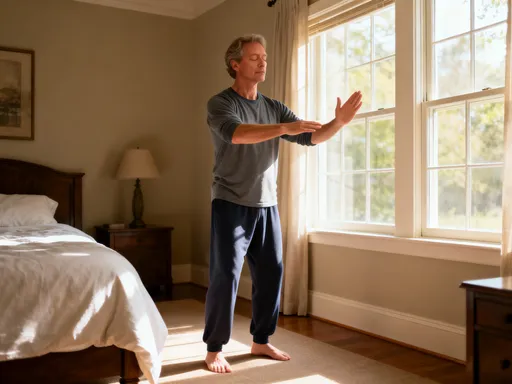
When I began my qigong practice, I knew I needed something sustainable—something I could do every day, even when I felt tired or discouraged. I started with just five minutes in the morning, gradually increasing to ten as the habit took root. I followed a beginner-friendly sequence from a certified instructor’s online video, ensuring the movements were safe and appropriate for someone in recovery. The routine was simple, requiring no equipment and minimal space—just enough room to stand with arms extended.
The first exercise was gentle arm waving, also known as “wave hands like clouds.” With feet shoulder-width apart, I slowly raised one arm while lowering the other in a continuous, flowing motion. The movement was small, almost imperceptible at first, but it encouraged shoulder mobility and deep breathing. I focused on keeping my shoulders relaxed and my breath steady, inhaling as the hand rose and exhaling as it fell. This simple action helped release tension in my upper back and improved my awareness of how I carried stress in my posture.
The second movement was pelvic tilting, done while standing with knees slightly bent. I gently rocked my pelvis forward and backward, creating a subtle undulation in the lower spine. This motion helped loosen tight hip flexors and relieve pressure on my lower back. It also reconnected me with my core muscles, which had become underactive after months of limited movement. Over time, I noticed that my walking gait became smoother and more balanced.
The final component was diaphragmatic breathing, practiced while standing or sitting. I placed one hand on my abdomen and breathed deeply through the nose, allowing my belly to rise on the inhale and fall on the exhale. I counted slowly to four on each breath, maintaining a calm rhythm. This practice, though seemingly basic, had a profound effect. Within a week, I found myself breathing more fully throughout the day, which improved my energy levels and reduced feelings of fatigue. The entire routine took less than ten minutes, but its cumulative effect was undeniable.
The Shift: Physical and Emotional Changes I Didn’t Expect
The improvements didn’t happen overnight, but by the third week, I began to notice subtle shifts. My morning stiffness, once severe enough to require slow, careful movement just to get out of bed, became milder and shorter-lived. I could bend down to tie my shoes without wincing. I slept more deeply and woke up feeling more refreshed—likely due to the calming effect of regular breathwork on my nervous system.
Perhaps more surprising were the emotional changes. I felt less anxious about my recovery. Instead of constantly monitoring my pain levels or worrying about setbacks, I began to approach healing with more patience and acceptance. This wasn’t resignation—it was a quiet confidence that my body was moving in the right direction. I attributed this shift to the mindfulness aspect of qigong. By focusing on the present moment during practice, I trained my mind to let go of rumination and fear, which had been silently draining my energy.
I also became more attuned to my body’s signals. Before qigong, I often pushed through discomfort, mistaking it for weakness that needed to be overcome. Now, I could distinguish between productive effort and harmful strain. This awareness helped me modify my physical therapy exercises more effectively and avoid overdoing it on good days—a common pitfall in recovery. As my range of motion improved, so did my motivation. Small wins, like reaching higher on a shelf or walking an extra block, felt meaningful because I could feel the progress in my body.
How to Start Safely: Tips for Beginners in Recovery
If you’re considering qigong as part of your recovery, the most important first step is to consult with your healthcare provider, especially if you have a chronic condition, recent surgery, or significant pain. Once cleared, begin with a form of qigong that is gentle and accessible. Medical qigong or rehabilitative qigong, often taught by licensed therapists or certified instructors, is specifically designed for people with health challenges.
Look for online resources from reputable organizations or certified qigong instructors. Avoid programs that promise quick fixes or dramatic results. Instead, choose those that emphasize safety, proper alignment, and gradual progression. Many beginners find it helpful to follow along with guided videos, which provide visual cues and verbal instructions to ensure correct technique.
Start small—five minutes a day is enough. Choose a consistent time, preferably in the morning or early evening, when you’re not rushed or distracted. Wear comfortable clothing and practice in a quiet space where you won’t be interrupted. Focus on your breath and the quality of movement, not the number of repetitions. Remember, qigong is not about performance. It’s about presence.
Listen to your body. If a movement causes pain or discomfort, stop or modify it. You should never feel strained or exhausted after a qigong session. In fact, most people report feeling more energized and calm. If you experience the opposite, you may be pushing too hard. Over time, you can gradually increase the duration to ten or fifteen minutes, but consistency is more important than length. Even on difficult days, showing up for a few minutes can maintain the habit and reinforce the mind-body connection.
Beyond Recovery: Why I Keep Practicing Long After Healing
Today, more than a year after my injury, I no longer experience pain or limitations. My physical therapy has ended, but my qigong practice continues. What began as a tool for recovery has become a cornerstone of my daily wellness routine. I practice every morning, not because I have to, but because I want to. It sets a calm, intentional tone for the day and helps me stay grounded amidst the busyness of family, work, and life’s inevitable stresses.
I’ve come to see qigong as a form of preventive care. Just as brushing your teeth prevents cavities, regular qigong practice helps prevent the buildup of tension, fatigue, and stress that can lead to injury or illness. It supports my posture, keeps my joints mobile, and helps me manage stress before it turns into physical symptoms. During busy weeks or times of emotional strain, those ten minutes become even more valuable—a quiet refuge that restores balance.
What I appreciate most is its accessibility. Unlike gym memberships or specialized equipment, qigong requires nothing but your body and a few minutes of time. It’s adaptable to any age, fitness level, or physical condition. My mother, in her seventies, now practices a seated version to help with arthritis, and my sister uses it to manage work-related stress. It’s not a cure-all, but it’s a powerful ally in maintaining long-term health.
For me, qigong has been more than a recovery aid—it’s been a teacher. It’s taught me to slow down, to listen, and to trust the body’s wisdom. It’s shown me that healing isn’t always about doing more; sometimes, it’s about doing less, but with greater awareness. In a world that often equates health with intensity and speed, qigong offers a different path—one of gentleness, consistency, and deep respect for the body’s natural rhythms.
Qigong didn’t replace medical care—but it enhanced it. By dedicating just minutes a day, I tapped into a natural way to support my body’s recovery. For anyone healing from injury, this gentle practice could be the quiet game-changer you’ve overlooked.